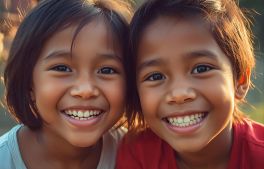
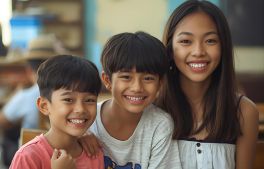
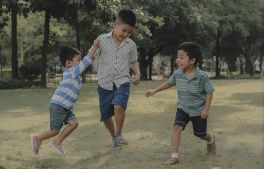
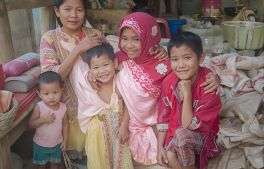
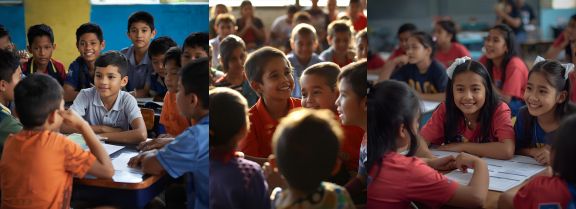
 Panay Island, Philippines — In a small village surrounded by rice fields and bamboo groves, children gather under a thatched roof for their daily lessons. This is part of the School of Living Traditions (SLT), a community-led program supported by the National Commission for Culture and the Arts.
Here, elders of the Panay Bukidnon people teach children not only literacy and numeracy, but also epic chants, weaving, and traditional dances. The sessions are informal, rooted in storytelling and hands-on practice. Children learn to recite the Sugidanon epics, to weave intricate binakol patterns, and to honor rituals that connect them to the land.
Parents describe the joy of seeing their children embrace traditions that once seemed at risk of fading. One mother shares: “When my daughter sings the old chants, it feels like our ancestors are alive again.”
The impact goes beyond cultural preservation. Children gain confidence, pride, and a sense of identity that strengthens their readiness for formal schooling. The SLT model has since spread to other Indigenous communities across the Philippines, proving that early childhood learning can be a powerful tool for cultural survival and community healing.